

Boston, 29 June 2026. Germany held the ball for two-thirds of the match, took twenty-one shots at goal, and scored once. Paraguay took seven shots and defended for two hours. It goes to penalties. Havertz misses. Woltemade misses. Tah puts his over the bar, and a country that had never lost a World Cup shootout goes home in the round of 32 to a team ranked forty-first in the world.
That is the number everyone remembers. 3-4, on penalties.
It is the wrong one.
The number that actually explains German football this summer is 450. Four hundred and fifty minutes: five full matches, and the threshold German football itself now uses, borrowed from a common European benchmark, to decide whether a young player’s transition into the professional game has really happened. Below it, he is a squad member. Above it, he is a footballer.
Now here is what Germany’s own league found when it went looking.
At 85 percent of clubs in the top two divisions, at least eighteen players under the age of twenty-two finish an entire season without reaching it.
Eighteen players. Per club. Every year.
No substitution in Boston was ever going to fix that.
Where a failure becomes visible
I spend most of my working life inside commercial engines, and the most expensive mistake I see is always the same one.
A company arrives with a revenue problem and a theory about it. The theory concerns the most visible surface. The ads are underperforming. Fix the ads.
Sometimes the ads are the problem. More often, the ads are fine, and the landing page fails to explain the offer. Or it explains it, and nobody believes it. Or they believe it, they buy, and the product does not deliver what the page promised, so retention dies in month two. Or retention is healthy, but there is only ever one thing to buy, so lifetime value never compounds and the whole machine runs on acquisition forever.
Six different failures. Six different repairs. All six arrive in the dashboard as the same line going down.
Misreading the data is rarely the real problem. The real error is treating the place where a failure becomes visible as the place where it began.
Football works exactly this way. When a national team goes out early, the country looks at eleven players, one coach, three substitutions and a missed penalty. Those are the ads. The engine sits somewhere else entirely: in who gets found at eleven, who gets coached at fourteen, who gets protected at sixteen, and who gets minutes at twenty.
By the time a squad walks out in Boston, the decisions that mattered were made a decade ago by people nobody can name.
What Germany has already built
Let me be fair to the DFB, because the lazy version of this article is already circulating and it is wrong.
The federation has not been asleep. It runs 339 regional development centers feeding roughly 14,000 selected talents between twelve and fifteen. Above that sit 58 licensed academies, mandatory for every club in the top two divisions. Above that, 40 elite football schools, each a formal partnership between a school, an academy, regional clubs and a state association. It is one of the most extensive talent infrastructures in world football.
The reform record is real too.
Children’s football has been rebuilt around small-sided games and constant ball contact. The national training philosophy now pushes net playing time and repetition rather than drills and queueing. The under-17 and under-19 competitions were redesigned in 2024/25 with the explicit goal of removing relegation fear, because the DFB concluded, in writing, that a culture of avoiding failure was slowing players down. There is a campus in Frankfurt, a competence team of serious people, and a new certification course for academy directors.
Most of it is correct. And a decade of it has produced an under-19 side good enough to reach a European final, which is not nothing.
The problem sits above all of it, in the one place nobody touched until this year.
What the league published about itself
In the spring, the DFL commissioned a data analysis of the transition from youth football into the senior game. What came back is the most damaging fact in German sport, and the league published it voluntarily, as the justification for a new competition.
Every second player from Germany’s highest under-19 division moves into non-professional structures below the fourth tier.
Read it again slowly. Not the average youth player. Not the boys who never made an academy. The best under-19 cohort in the country, the graduates of a system with 58 licensed academies and 40 elite schools behind it, and half of them drop beneath the fourth division.
Not sold. Not loaned into anything meaningful. Gone from the professional track altogether.
Set that beside the 450 minutes, and you have the whole diagnosis. Germany finds its players. Germany coaches its players. Then, somewhere between nineteen and twenty-two, Germany stops converting them, and the country has spent eight years calling this a talent shortage.
You cannot simulate elite football. You have to be inside it while it is happening to you, against grown men who need the result to pay their rent.
The DFL’s answer is the Bundesliga Talent Series, an additional under-21 competition launching this season with 26 clubs. Credit where it belongs: it is the right diagnosis, made publicly, by people who were under no obligation to make it.
It is also a plaster.
Participation is voluntary. Each club plays a minimum of three matches per half-season and a maximum of six. Behind closed doors, for now. Against opposition of its choosing. With up to four overage players permitted in the side.
So a Bundesliga club can discharge its responsibility for the largest structural failure in German football by playing six extra matches a year, in private.
Six matches, against a hole that swallows half the best cohort in the country.
The comparison Germany prefers, and the one it should be looking at
Everybody reaches for France, me usually too, and the numbers are seductive.
Of the 1,248 players at this World Cup, 99 were born in France. Only 23 of them play for France. The other 76 are distributed across Algeria, Haiti, DR Congo, Senegal, Ivory Coast and everywhere else the country’s history reaches. Paris alone produced more World Cup footballers than any city on earth.
France built something real in the Île-de-France: enormous numbers of children, ferocious street and club competition, tight geography, scouts on every corner, and a federal pathway that picks a boy up at thirteen and squeezes. Germany has good regions. France has a reactor.
But sit with the table a little longer and the more uncomfortable comparison is not France at all.
It is the Netherlands.
Germany produced 50 of the players at this World Cup, from a population of roughly 84 million. The Netherlands produced 67, from a population of roughly 18 million. England, with two-thirds of Germany’s population, produced 47.
The Dutch do not settle the migration question. They have their own colonial and postcolonial histories, and anyone who has watched Amsterdam or Rotterdam produce footballers knows exactly where much of that talent comes from.
What the Dutch settle is the size question.
Germany cannot claim it lacks people: the Dutch have a quarter as many. It cannot claim it lacks money: the Bundesliga outspends the Eredivisie many times over. It cannot claim it lacks structure: it has more of it than anyone.
What the Dutch have, and have had for forty years, is a small system that knows precisely what it is for. The best play the best, early and constantly. Young professionals get thrown into senior football before they are ready, because there is nobody else available to play.
Germany has the opposite condition. A system large enough that nobody inside it ever has to be uncomfortable. There is always another academy, another loan, another year, another development plan.
Distribution without density. Support without stakes.
Minutes are the bridge, not the destination
Now I have to complicate my own argument, because minutes alone will not save this.
A streamlined player with 900 minutes is still a streamlined player.
A country does not become dangerous because more young names appear on team sheets. It becomes dangerous when the right kinds of players are pushed across the bridge early enough to become real, and Germany’s shortage was never a shortage of professionals.
It was a shortage of profiles.
Germany needs 1v1 chaos wingers who break a dead match without asking permission. It needs a press-resistant six who keeps the structure alive at the exact moment the opponent finally presses. It needs a ball-carrying power eight who converts pressure into territory. It needs fast hybrid defenders who can defend space rather than a position. It needs modern wing-backs who create width without becoming decorative. It needs a penalty-box nine who attacks the final five meters as though they were the only five that mattered.
And it needs players willing to put their body between the game and the opponent at the point where the game turns ugly.
Look at what Germany actually took to the World Cup. Technically excellent. Tactically literate. Positionally clean. Capable of holding sixty-five percent of the ball against a team from the fifth pot and doing almost nothing dangerous with any of it.
Minutes only matter if those are the players receiving them.
Otherwise Germany will simply manufacture more well-coached young professionals who understand the game, explain the game, respect the game, and never once change it.
One position up, one position down
There is a second half to the profile argument, and I take it from the sport I actually coached.
Basketball has five positions and almost nobody plays only one of them. A shooting guard is expected to survive at point guard and small forward. A small forward should be able to slide up to power forward and down to shooting guard. A power forward, in the modern game, has to cover both small forward and center for stretches of a match. The pure specialist still exists, and sometimes he is the best player on the floor. But the standard expectation is that you are elite at one thing and functional at the two things beside it.
One position up. One position down.
That is the piece missing from the German conversation, and it is missing because Germany has confused two very different qualities.
Germany already produces versatile players. What it does not produce is versatile specialists.
The German academy graduate is often moderately competent in three positions and dangerous in none of them, which is what happens when flexibility is treated as a substitute for excellence rather than an extension of it. Basketball does the opposite. The base is sharp. The range is deep enough to be useful. Nobody is asked to be a bit of everything.
You can see the German version of this failure at the top of the pyramid, and it has a name.
Joshua Kimmich has spent years being asked to play right back. Not because Germany is building strategic depth, but because Germany does not have a right back and Kimmich is the most convenient body in the room. That is versatility used as a patch. In basketball terms, it is playing your best point guard at center because you forgot to draft one, and then wondering why the team looks smaller than everybody else.
The alternative is versatility used as design.
A press-resistant six who can drop into a back three when the opponent presses with three forwards. A ball-carrying eight who plays as a six against a low block and as a ten against a high line. A fast central defender who slides to full back inside the same match. A wing-back who pushes up into the winger’s line the moment the team shifts to a back four. A winger who can play as a second striker for twenty minutes because the game has stopped needing width and started needing bodies in the box.
Modern football changes shape three or four times inside ninety minutes. A team whose players can each only do one thing has to make a substitution every time it wants to change. A team whose players can each do the adjacent thing changes shape without changing personnel, and that, more than possession or pressing, is what separates the sides who solve tournaments from the sides who explain them afterwards.
So the specification Germany needs is narrower and wider at the same time.
Sharpen the profile until it is actually dangerous. Then teach it to move one position in each direction.
Not a bit of everything. One thing, done frighteningly well, plus enough range to be useful when the game turns.
What no academy fully replaces
There is a story that goes around German football every summer, about a council that built artificial mounds into a public pitch so children could no longer play on it. I cannot verify it, so I will not use it.
The documented version is more ordinary, and more revealing.
Since 2011, German law has technically protected the right of children to make noise. Playgrounds and similar facilities are exempt from standard noise regulation, precisely so a neighbor cannot sue a swing set out of existence. And yet German administrative courts have still ordered football pitches closed. In Berlin, a court ordered a pitch shut and its goals and ball-catch fencing physically removed after a neighbor proved the opening hours were being ignored. In Düsseldorf, a court banned football on a site outright.
Courts do not always rule against play, and they should not. Noise law exists for a reason, and plenty of pitches survive because a town simply enforces its own hours. But the pattern tells you something. Public sport space in Germany is legally protected on paper and administratively fragile in practice, easier to remove than to govern well.
This week, outside Munich, a meadow that had served as an informal pitch and meeting point for years was fenced off overnight, with no warning to anyone.
I grew up in Leipzig, in a country that no longer exists, and I want to resist the nostalgia this invites, because nostalgia here is cheap. The pitches of my childhood were not sacred. They were loud, occasionally violent, frequently unfair. The older boys took the ball. The goals were broken. The neighbors had a point.


Free play works less like a moral good and more like an input.
But it is a specific input, and no academy replaces all of it. Free repetition, hour after hour, with nobody counting. Social hardness. Mixed-age games where an eleven-year-old has to survive fifteen-year-olds. Rules negotiated on the spot, by children. One-against-one without a coach stopping the action to explain the correct solution. Mistakes without video analysis. Courage, because nobody is going to hand you the right answer. Stress, because someone older and better is forcing you to adapt or disappear.
Call it what it actually is: developmental architecture, producing something no curriculum can manufacture on its own.
The question is not whether every neighborhood must tolerate a floodlit cage until midnight. The question is whether a serious country builds enough controlled spaces where children are allowed to be loud, physical, creative and self-organized before they are old enough to be managed.
Open schoolyards. Public courts. Supervised evening slots. Maintained small-sided pitches instead of removed ones. Places where sport is not only sold as a club product but permitted as a public habit.
Germany should keep its structure. It needs to put the friction back inside it.
The players who never lose the ball
The criticism has been circulating for a decade. German academies were producing streamlined players. Technically competent. Interchangeable. Boys who could explain afterwards precisely why the situation had been read wrongly, and who never, in the moment, simply took the shot from twenty meters because what exactly was going to happen.
That was the criticism then.
In Boston, with twenty-one attempts and one goal against the forty-first-ranked team in the world, it was still the criticism.
Here is the distinction Germany has spent fifteen years refusing to draw. A well-coached player recognizes, afterwards, why the situation was solved wrongly. A difference-maker recognizes, during it, that the game needs something else entirely.
Germany builds the first kind reliably and the second kind by accident.
The DFB now says it wants a better error culture, and it means it. But error culture does not mean lowering the standard. It means allowing a player to fail while he develops the skills that will later decide matches, and holding him to a higher standard precisely because of it.
Germany confused mistake avoidance with quality.
An academy that produces players who never lose the ball may also be producing players who never break a game. And a boy who is never once allowed to solve a problem alone becomes, eventually, an adult who waits for a process to tell him what courage would have looked like.
That is not only a football problem. But it is a football problem first, and it is visible on television.
The sport that measured what football is still discussing
Before I ever built a company, I coached basketball in Germany and Malta, and was even requested in the Philippines.
I mention it because the second half of this argument is not something I read in a report. It is something I watched from inside, and because German basketball is the closest thing to a controlled experiment anyone has been handed on this question.
Basketball in Germany has less money than football, fewer members, smaller crowds, weaker media and a fraction of the cultural weight.
In 2023 it won the World Cup. In 2025 it won EuroBasket, undefeated, becoming the fourth nation in history to hold both titles at the same time. In June, two Germans went in the first round of the NBA draft, the first time that had happened since 1985, and a third went in the second. The under-18s won a European title in 2024. The under-19s took World Cup silver in 2025.
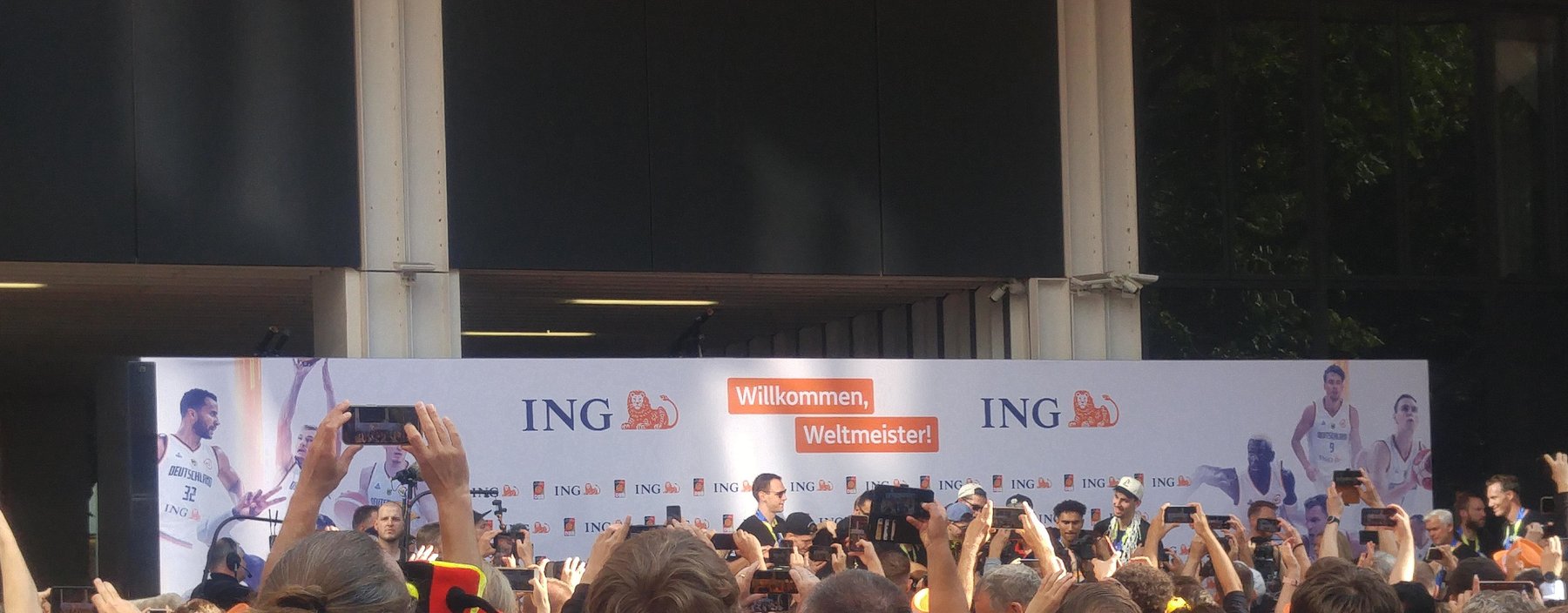

The romantic explanation is a golden generation and a great captain, and both are real. What actually explains it is duller: the license.
Here is what a club must prove, in writing, to play in the German basketball Bundesliga. That it fields a team in the national under-19 league and the under-16 league. That it employs two qualified youth coaches full-time, on proper contracts, above a stated salary floor, with no part-time workarounds and no doubling up with the senior staff. That it runs weekly basketball in at least five primary schools across the entire school year, audited annually.
Spending on youth development should not fall below eight percent of the player budget. Meeting these criteria is a hard precondition of the license itself, not a nice-to-have.
Then comes the part German football has no equivalent of.
The basketball development fund pays training premiums back to the clubs that raised a player, and those premiums are triggered by minutes actually played. Five hundred minutes in the top league generate a payment. Smaller thresholds apply further down: 272 for a rotation player, 450 for an under-21 in the second division, 400 for an under-20 in the third, 280 for an under-19 in the national youth league.
The money is then split across every club that developed him, weighted by the phase he spent there, and the two heaviest weightings sit on the years between nineteen and twenty-four.
Look at that threshold again.
Four hundred and fifty minutes.
German basketball has been paying against precisely the number German football has only just discovered it is failing.
One sport wrote the transition into its financial architecture. The other spent a decade certifying its pitches.
Basketball has structural advantages here, and I am not going to pretend otherwise. Five men on a court. Small squads. A nineteen-year-old is visible immediately. Football is bigger, more crowded, more political, harder to move.
But nothing about squad size prevents a football league from tying money to minutes. That is a choice, and Germany has been making it the other way for fifteen years.
Late developers and the German appeals process
One reform deserves proper credit, because it is the smartest thing the DFB has done in a decade and almost nobody outside youth football has noticed it.
The relative age effect is the quiet slaughter of youth sport. Two boys in the same age group can sit two years apart in physical maturity. The early developer wins his duels at thirteen, gets selected, gets coached, gets seen. The late developer, who may be the better footballer, loses his duels and is written off before his body arrives.
Messi is the famous survivor. The system is built out of the ones who did not survive.
Germany now has a mechanism called Playing Down. A boy whose biological age, measured through height, sitting height and weight, sits more than a year behind the average for his age group can apply for permission to play a year below. It has moved from pilot to permanent, twenty of twenty-one state associations use it, and from this season it extends to under-18s and into the national youth league.
It is scientifically supervised. It is correct.
It is also an exemption, and exemptions are what institutions build instead of change. The player must be spotted. The club must file. A parent must sign. A second measurement must be scheduled and approved.
Playing Down still treats developmental difference as a case to be corrected rather than a normal fact to design around. Compare England, where entire competitions are organized by biological maturity rather than birth year, so that late developers are not applying for relief from the system but competing inside a version of it built for them.
Germany took the diagnosis seriously and built an appeals process.
That is the German answer to almost everything, and it is why the country is very good at fairness and very slow at everything else.
What all of this costs
There is an uncomfortable financial fact sitting underneath every paragraph above.
Full-time youth coaches cost money. Public pitches cost money. Data systems, maturity testing, school partnerships and regional elite clusters all cost money, and German sport still discusses capital as though money itself were the threat.
That is too easy, and I say that as somebody who has watched capital do real damage to clubs.
Capital destroys a sport when it treats clubs as assets, communities as inventory, youth development as a cost center, and the six-to-ten-year exit window as the only clock that matters. It builds a sport when it is tied to coaching quality, facilities, school access, public space and measurable player output.
Which one you get is decided by governance, not by whether the check clears.
Fifty-plus-one is a real cultural achievement and I would not remove it. But it has quietly become an alibi. The rule exists to protect German clubs from extraction. It is too often used to protect them from investment as well, and those are very different jobs wearing the same jersey.
Tradition is not a funding model.
The question was never whether money should enter German football. It is already there. The only question is what the money is permitted to buy, and at the moment it is permitted to buy almost anything except the thing the league has just admitted it lacks.
Three uncomfortable reforms
No wish list. Three mechanisms, all of which already exist somewhere, none of which require new philosophy.
Publish a Talent Conversion Table. Every year, for every club in the top two divisions, in public.
How many under-21 players crossed 450 minutes. How many crossed 990? How many academy graduates are playing professional football three years later, and at what level? How many are still above the fourth tier at all? How many loans produced real minutes rather than a parking space. And which bottleneck profiles the club actually developed: the fast central defender, the wing-back, the six, the box striker, the winger who takes people on, and how many of them can play the position on either side of their own.
A club that talks about youth development should not be allowed to hide behind an academy brochure and a photograph of its gym. It should have to show where its best nineteen-year-olds are three years later.
Clubs will hate this. Sporting directors will call it reductive. That reaction is the entire point, and it is the reason it works.
Make money follow minutes and profiles. The third division already does a version of this, releasing development funds when a German under-21 crosses a minutes threshold at a club that trained him. It works. It should be the operating logic of the Bundesliga and the second division, and part of the league’s central distribution should hang on it.
Build superclusters. Germany has no Paris. It has the Ruhr and the Rhineland, Berlin and Brandenburg, Rhein-Main, Stuttgart and Karlsruhe, Munich and Augsburg, Hamburg and Bremen, and the Leipzig-Halle-Dresden triangle. Seven regions where the best players of a birth year could be training and playing against each other every week rather than dominating a regional league inside their comfort zone.
Not a summer camp. Not an annual scouting event. Constant, uncomfortable, weekly pressure.
The 339 development centers are an achievement of distribution, and distribution is how you find players. Density is how you sharpen them. Germany has consistently chosen the first at the expense of the second, because the first is politically easy and the second requires telling twenty-one state associations that some regions matter more than others.
None of this is radical. All of it is uncomfortable, which in Germany has become the same word.
The honest test date
So what about the boys in Wrexham?
Germany’s under-19s reached the European final on 11 July and lost it 2-0 to Spain, having already been beaten 4-0 by the same team in the group stage ten days earlier. It was still the country’s best result at that level since 2014, which happens to be the last year the senior team won anything.
The optimistic reading is that the reforms are landing. The small-sided games, the reduced relegation pressure, the training philosophy. Be patient. Wait.
I would take that seriously if I did not already know what a good German youth cohort is worth.
Germany has had them before. The question was never whether Germany can assemble a team that plays well at nineteen. The question is what those same boys are doing at twenty-two, and the league has already published the answer for every cohort that came before them. Half of them will be below the fourth division. At almost every club, eighteen of them will finish a season without five full matches to their name.
A good under-19 side is a signal, not a proof.
That proof arrives around 2030, when somebody counts how many of the boys who lost in Wrexham are playing regular football in a top-five league, and how many are twenty-three years old, technically superb, beautifully coached, and playing in front of four thousand people on a wet Saturday in the third tier.
Germany does not have to produce more footballers. It has to produce more footballers who change games, and then it has to let them onto the pitch while they are still young enough to become dangerous.
Basketball worked that out with a fraction of the money, because it had no choice. Football has every resource, which is exactly why it still has a choice, and why it keeps making the comfortable one.
Somewhere in Germany this weekend there is a fourteen-year-old playing a game nobody is filming. He is smaller than everyone around him. He loses most of his duels. And he tries the difficult pass anyway, because so far nobody has told him not to.
What happens to him over the next eight years is the only reform question that matters.